


Professional Trainings
Shari leads international trainings in the Cultivation of Therapeutic Presence (TP), a foundational and trans-theoretical approach designed to create effective therapeutic relationships. TP involves being fully present on a multiplicity of levels: physically, emotionally, cognitively, and relationally. TP helps therapists attune to themselves while being attuned to others to most effectively help them. Research suggests that mindfulness and compassion practices can help to cultivate this foundational approach to therapy. TP builds and strengthens positive therapeutic relationships and helps to utilize treatment approaches from different perspectives most effectively. In this training, you will develop a theoretical and experiential understanding of therapeutic presence, including the neurophysiological underpinnings of TP. You will also explore how mindfulness practice and self-compassion helps remove barriers to presence and deepens your ability to attune to the moment.
Therapeutic presence (TP) and Self-compassion (MSC) are trans-theoretical mechanisms of change in psychotherapy and the emotional heart of mindfulness when we meet suffering. Self-compassion is a part of presence, and yet strengthens presence. Both therapeutic presence and self-compassion are powerful resources for clinicians to maintain emotional balance in the midst of challenging clinical work, to enjoy their work and their clients more fully, and to prevent caregiver fatigue.
Since presence and self-compassion need to be directly experienced to be understood, this training is largely experiential, including meditation, musical rhythm, imagery, and creative exercises. It also contains short lectures, class exercises, videos, poetry, and group discussion. Participants receive instructions onto a wide variety of practices that can be practiced at home, and also taught to clients, students, and trainees.
Mindful Self-Compassion (MSC) is an empirically supported, 8-week training program designed to cultivate the skills of self-compassion. Based on the groundbreaking research of Kristin Neff and the clinical expertise of Christopher Germer, MSC teaches core principles and practices that enable participants to respond to difficult moments in their lives with kindness, care and understanding.
The three key components of self-compassion are self-kindness, a sense of common humanity, and balanced, mindful awareness. Kindness opens our hearts to suffering, so we can give ourselves what we need. Common humanity opens us to our essential interrelatedness, so that we experience the shared suffering that is part of being human. Mindfulness opens us to the present moment, so we can accept our experience with greater ease.
Self-compassion provides emotional strength and resilience and can be learned by anyone. Rapidly expanding research demonstrates that self-compassion is strongly associated with emotional well-being, less anxiety, depression and stress, maintenance of healthy habits such as diet and exercise, and satisfying personal relationships.
Shari is part of an expert team of leaders in the Self-Compassion in Psychotherapy (SCIP) Certificate Program offered by the Centre for Mindful Self-Compassion. Compassion-based psychotherapy has been shown to alleviate a wide range of psychological disorders, including anxiety, depression, eating disorders, and substance dependency. It also appears to be an underlying mechanism by which other kinds of therapy seem to work. This program is created specifically for psychotherapists who see the importance of self-compassion for mental health and well-being and want to integrate self-compassion more deeply into their own way of practice. Learners will have a foundation in mindfulness- and acceptance-based treatment, and endeavour to use their personal mindfulness and compassion practice as a foundation for effective therapeutic relationships and interventions. For more information, please visit: https://scipprogram.com/
Shari offers bespoke trainings, workshops and retreats that can be specifically designed and tailored to your agency, group, clinic or professional clinical community. For more information and inquiries please contact: camilla@sharigeller.ca
Upcoming Trainings & Events
September 17 & 18, 2026
Online via Zoom Video Conferencing
Facilitated by: Dr. Shari Geller, C.Psych.
Hosted by: EFT Institut Nederland (EFTiN)
WHAT TO EXPECT:
Therapeutic Presence (TP) and Self-Compassion (SC) are foundational to effective therapeutic relationships and positive outcomes. They are not simply skills, they are ways of being that shape the depth, safety, and impact of our clinical work.
This Masterclass is a unique integration of advanced professional training and restorative immersion. Designed specifically for therapists, it combines empirically grounded learning with experiential practice in a reflective, retreat-like environment. Participants can deepen their clinical capacities while also nourishing their own well-being and vitality.
Therapeutic presence is a way of being that optimises the doing and techniques of therapy. TP provides clients with a sense of safety, allowing them to be seen, heard, understood, and “feel felt,” while also strengthening the therapeutic alliance. This allows clients to access and express their core pain and emotions and engage in the deeper work of therapy. This type of relationship helps regulate clients’ emotions and supports their movement towards emotional health and neurophysiological integration. TP also invites therapists to work on their own balance of presence and compassion with self and clients, ensuring they remain centered and effective even in the face of difficult emotions. Practicing TP also sustains clinicians’ vitality, connection, and effectiveness.
Self-compassion is a key resource in maintaining therapists’ presence and working with the barriers to presence. SC involves meeting our emotions and difficult experience with mindfulness, common humanity, kindness, and warmth.
Together, therapeutic presence and self-compassion are powerful resources for counsellors to maintain emotional balance amid challenging clinical work, to enjoy their work and their clients more fully, and to prevent caregiver fatigue and burn-out.
The Masterclass Dimension: Clinical Depth & Skill Development
An empirically validated model of Therapeutic Presence will be introduced and how to create safety using neurophysiological principles based on concepts such as co-regulation and neuroception of safety stemming from Polyvagal Theory (Geller & Porges, 2014). Evidenced based practices from Shari Geller and Leslie Greenbergs’ books, ‘A Practical Guide for Cultivating Therapeutic Presence’ (Geller, 2017) and ‘Therapeutic Presence: A Mindful Approach to Effective Therapeutic Relationships 2nd Edition (Geller & Greenberg, 2022) including mindfulness, self-compassion, and experiential practices will be incorporated.
Through teaching, video tapes and role plays, and experiential exercises, participants will:
- Explore an empirically validated model of Therapeutic Presence along with key skills for cultivating presence
- Understand the neurophysiological mechanisms of therapeutic presence to support safety, co-regulation, and emotional integration
- Practice presence and self-compassion techniques for clinical settings and in life to sustain emotional connection with clients and working through therapeutic ruptures.
- Build skills for attuning in the moment to the nuances of clients’ experience to enhance effective therapy.
- Apply presence and self-compassion skills for self-care and to prevent and alleviate burnout
The Immersive Dimension: Restoration, Embodiment & Community
Beyond skill acquisition, this experience offers a spacious environment for renewal and integration.
Set in a restorative natural setting, the retreat invites therapists to slow down, reconnect, and embody the practices they offer their clients. Participants will deepen their ability to be present and compassionate through experiential practices to cultivate greater attunement and connection with self, others and with nature.
Through guided mindfulness and self-compassion practices, reflective time in nature, and shared dialogue in community, participants will:
- Cultivate deeper attunement to self, others, and environment
- Strengthen resilience and sustainable presence in clinical work
- Experience connection and collegial support within a community of therapists
By tending to our own presence and compassion, we expand our capacity to accompany clients into deeper emotional work.
Participants return to their work feeling grounded, energized, and equipped with both refined clinical skills and renewed inner resources.
No prior experience with mindfulness or self-compassion is required. This training is appropriate for therapists at all stages of practice who wish to deepen professional learning, clinical skills and personal sustainability.
FACILITATOR:
Dr. Shari Geller is an author, clinical psychologist, certified Mindful Self-Compassion (MSC) teacher and leader in the field of therapeutic presence.
Shari offers training modules in therapeutic presence internationally as part of a longer-term vision of having presence be a foundational training across psychotherapy approaches. With over thirty years’ experience weaving psychology and mindfulness, Shari is a co-editor on a new book: Grounding Psychotherapy in Self-Compassion (2025). Shari co-authored the book, Therapeutic Presence: A Mindful Approach to Effective Therapeutic Relationships – 2nd Edition (2022) with Dr. Leslie S. Greenberg. Shari’s book: A Practical Guide For Cultivating Therapeutic Presence (2017), offers hands on tools and guidance for cultivating and strengthening presence in therapy. Shari created the Therapeutic Rhythm and Mindfulness Program (TRM™), a group modality integrating mindfulness, rhythm practices and emotion-focused awareness to enhance wellbeing and presence. Shari serves on the teaching faculty in Health Psychology at York University and is Adjunct Professor in the Faculty of Music at the University of Toronto, in association with Music and Health Research Collaboratory (MaHRC).
Shari is part of the core faculty of the Self-Compassion inside Psychotherapy (SCIP) certificate program and is Membership and Networking Committee Chair for the International Society for Emotion Focused Therapy (isEFT).
Shari is the co-director of the Centre for MindBody Health, in Toronto, where she offers training, supervision and therapy in Emotion-Focused therapy (EFT) and Mindfulness and Self-Compassion modalities for individuals and couples.
October 5 – December 7, 2026
Online via Zoom Video Conferencing
Facilitated by: Dr. Shari Geller, C.Psych. & Galia Tyano Ronen
Hosted by: Center for Mindful Self-Compassion
WHAT TO EXPECT:
The Self-Compassion inside Psychotherapy (SCIP) Program is designed and hosted by the Center for Mindful Self-Compassion.
The Self-Compassion in Psychotherapy (SCIP) Program addresses a crucial need within the therapeutic community. It identifies a gap in the integration of self-compassion practices into psychotherapy. The program is a response to the growing acknowledgment among psychotherapists of the importance of self-compassion for mental health and wellbeing. It aims to equip therapists who have benefited from Mindful Self-Compassion (MSC) practices with the skills to incorporate these principles into their clinical work. Furthermore, it seeks to support clinicians in using their personal mindfulness and compassion practices as a foundation for fostering effective therapeutic relationships and interventions. This initiative is also driven by the desire to offer a continuing education experience that is inclusive and welcoming to all identities and intersections of identity, addressing the call for greater diversity, equity, inclusion, and belonging in therapeutic practices.
The SCIP program is specifically designed for:
- Psychotherapists of all persuasions who recognize the significance of self-compassion in mental health and wish to deeply integrate it into their practice.
- Therapists who have benefited from MSC practice and aim to incorporate MSC principles and practices into their client treatments.
- Clinicians seeking to base their therapeutic relationships and interventions on their personal mindfulness and compassion practices.
- Therapists in search of a continuing education experience that is inclusive and accommodating to all identities and intersections thereof.
Step 2: Small Group Consultations
This 10-week practicum-style series provides small-group consultation and case reflection with a focus on specific clinical populations and contexts. It includes:
- Practice with inquiry and intervention
- Role-play and case consultation
- Integration of theory into clinical application
- Continued personal practice support
Format:
- 10 weeks | 2 hours/week | Max 16 per group
- Total contact hours: 20
December 11, 2026
Online via Zoom Video Conferencing
Facilitated by: Dr. Shari Geller, C.Psych.
Hosted by: SoCal Institute of Emotion Focused Therapy
WHAT TO EXPECT:
Therapeutic presence (TP) and Self-Compassion (SC) are foundational to effective therapeutic relationships and positive outcomes. They are not simply skills, they are ways of being that shape the depth, safety, and the impact of our clinical work. In this half-day masterclass, we introduce their foundational role in creating transformative therapeutic alliances and emotional change.
Therapeutic presence is a way of being that optimizes the doing and techniques of therapy. TP provides clients with a sense of safety, allowing them to be seen, heard, understood, and “feel felt,” while also strengthening the therapeutic alliance. This allows clients to access and express core emotions and engage in the deeper work of therapy. This type of relationship helps regulate clients’ emotions and supports their movement towards emotional health and neurophysiological integration. TP also invites therapists to work on their own balance of presence and compassion with self and clients, ensuring they remain centered and effective even in the face of difficult emotions. Practicing TP also sustains clinicians’ vitality, connection, and effectiveness.
Self-compassion is a key resource in maintaining therapists’ presence and working with the barriers to presence. SC involves meeting our emotions and difficult experience with mindfulness, common humanity, kindness, and warmth. Together, therapeutic presence and self-compassion are powerful resources for counsellors to maintain emotional balance in the midst of challenging clinical work, to enjoy their work and their clients more fully, and to prevent caregiver fatigue and burn-out.
In this introductory masterclass, an empirically validated model of TP will be introduced as a map to build and strengthen the essential skills of presence with clients. In addition, the neurophysiological principles to creating safety with therapeutic presence, based on concepts such as co-regulation and neuroception of safety stemming from the polyvagal theory (Geller & Porges, 2014) will be touched on. Evidenced-based, experiential practices from Dr. Geller’s books, ‘A Practical Guide for Cultivating Therapeutic Presence’ (2017) and ‘Therapeutic Presence: A Mindful Approach to Effective Therapeutic Relationships 2nd Edition (2022) co-authored with Leslie Greenberg, will be introduced.
In this half-day masterclass, you will be introduced to:
- an empirically validated model of therapeutic presence along with key skills for cultivating presence
- the neurophysiological mechanisms and benefits of therapeutic presence
- practices and skills for attuning in the moment with clients
- presence and self-compassion techniques to sustain emotional connection with clients
- presence and self-compassion skills for self-care and to prevent and alleviate caregiving fatigue and burnout
Dr. Shari Geller is an author, clinical psychologist, certified Mindful Self-Compassion (MSC) teacher and leader in the field of therapeutic presence.
Shari offers training modules in therapeutic presence internationally as part of a longer-term vision of having presence be a foundational training across psychotherapy approaches. With over thirty years’ experience weaving psychology and mindfulness, Shari co-authored the book, Therapeutic Presence: A Mindful Approach to Effective Therapeutic Relationships – 2nd Edition (2022) with Dr. Leslie S. Greenberg. Shari’s book: A Practical Guide For Cultivating Therapeutic Presence (2017), offers hands on tools and guidance for cultivating and strengthening presence in therapy. Shari recently co-edited Grounding Psychotherapy in Self-Compassion (2025). Shari serves on the teaching faculty in Health Psychology at York University and is Adjunct Professor in the Faculty of Music at the University of Toronto, in association with Music and Health Research Collaboratory (MaHRC).
Shari is actively involved in various professional committees including the
Self-Compassion in Psychotherapy (SCIP) certificate program and is the Chair for the Membership and Networking Committee for the International Society for Emotion Focused Therapy (isEFT).
Shari is co-director of the Centre for MindBody Health, in Toronto, where she offers training, supervision and therapy in Emotion-Focused therapy (EFT) and Mindfulness and Self-Compassion modalities for individuals and couples. Shari enjoys playing the HandPan and djembe and founded the Therapeutic Rhythm and Mindfulness Program (TRM™). Her love of nature and her dog, along with her 35-year personal meditation practice helps to keep her present in the moment.
Training Calendar
Cultivating Therapeutic Presence and Self-Compassion in Clinical Practice: An Immersive Masterclass for Strengthening Therapeutic Relationships and supporting Therapist Well-Being
September 17 & 18, 2026
Dr. Shari Geller, C.Psych.
SCIP Part 2 – Consultations
October 5 – December 7, 2026
Dr. Shari Geller, C.Psych. & Galia Tyano Ronen
Therapeutic Presence and Self-Compassion
December 11, 2026
Dr. Shari Geller, C.Psych.
Publications
Grounding Psychotherapy in Self-Compassion

Presenting innovative ways to infuse self-compassion into psychotherapy, this book shares ideas and tools from leaders in the field. Clinicians from any orientation are guided to cultivate self-compassion themselves and incorporate it into interventions with clients. Rich case material throughout the chapters illustrates applications for frequently encountered clinical problems, from anxiety disorders, depression, trauma, and emotional dysregulation, to addictions, eating disorders, chronic pain, and more. Core processes of self-compassion and mindfulness are reviewed, including cutting-edge findings from interpersonal neurobiology. The companion website features more than 15 downloadable audio tracks of guided practices from the book, together with reproducible scripts.
Buy it from:


Therapeutic Presence: A Mindful Approach to Effective Therapeutic Relationships – 2nd Edition
Therapeutic presence—one’s ability to exist fully in the moment with a client—is crucial to effective psychotherapy practice. Since the first edition of Therapeutic Presence was published nearly a decade ago, further research has emphasized the role and deepened our understanding of this essential building block of effective therapeutic relationships.
This book is a detailed guide on cultivating therapeutic presence for new and seasoned therapists alike. The authors’ model is based on the results of their extensive study, and revolves around three key aspects of therapeutic presence:
- Using mindfulness and experiential exercises to create the conditions for presence, both prior to and in sessions;
- Generating attunement to self and others, as a precursor that facilitates therapeutic presence; and
- Recognizing the felt experience of in-session presence.
With practical, research-based scenarios and exercises, as well as a full training program for cultivating presence in students and trainees, this text will help train the next generation of therapists in the nuts-and-bolts of empathic attunement and a strong therapeutic alliance to create effective therapy.
Buy it from:

A Practical Guide to Cultivating Therapeutic Presence (2017)
 Being fully present with clients can be challenging for health practitioners, given the emotional demands of their intensive work combined with any number of physical and mental distractions, which can make it difficult to establish a healing therapeutic alliance. In this practical guide, author Shari Geller translates empirical research—including neurophysiological evidence—into simple exercises that clinicians of all theoretical persuasions can use to set a pre-session foundation for presence and develop presence throughout therapy. Geller also emphasizes therapist self-care with practices that clinicians can implement in their daily lives, which ultimately translates into more effective therapy.
Buy it from:

Therapeutic Presence: A Mindful Approach to Effective Therapy (2012)
 The therapeutic relationship is essential to positive outcomes of psychotherapy. In this book, Shari M. Geller and Leslie S. Greenberg argue that therapeutic presence is the fundamental underlying quality of the therapeutic relationship and, hence, effective therapy.
Therapeutic presence is the state of having one’s whole self in the encounter with a client by being completely in the moment on a multiplicity of levels: physically, emotionally, cognitively, and spiritually. Present therapists become aware of both their own experience and that of their client through bodily sensations and emotions, and this awareness helps them to connect deeply with the client. Therapeutic presence is not a replacement for technique, but rather a foundational therapeutic stance that supports deep listening and understanding of the client in the moment.
Buy it from:
- Being Present and Together While Apart: Therapeutic Presence in Telepsychotherapy. In Advances in Online Therapy (pp. 21-34). Routledge. Geller, S.M. (2022)
- Being with Grief and Loss: The Foundational Role of Therapeutic Presence. In Compassion-Based Approaches in Loss and Grief (pp. 93-101). Routledge. Geller, S., & Dias Martins, C. (2022)
 Cultivating Therapeutic Presence: Strengthening Your Clinical Heart, Mind, and Practice (2020)
Creating Safety: Therapeutic presence and the Polyvagal Theory (2014)
Therapeutic Presence as a Foundation for Relational Depth (2013)
Therapeutic Presence: An Essential Way of Being (2013)
Therapeutic Presence: A Fundamental Common Factor in the Provision of Effective Psychotherapy (2012)
Therapist and client perceptions of therapeutic presence: The development of a measure (2010)
 Therapeutic presence measure TPI – T (therapist version)
Therapeutic presence measure TPI – T (therapist version) – French Version
Therapeutic presence measure TPI – C (client version)
Therapeutic presence measure TPI – C (client version) – French Version
Cultivation of Therapeutic Presence: Therapeutic drumming and Mindfulness practices (2009)
The Power of Drumming: Healing through Sound and Rhythm (2006)
Therapeutic Presence: Therapists’ experience of presence in the psychotherapy encounter (2002)
La Presence Therapeutique (French translation)
Congruence and Therapeutic presence (2001)
Peer responses to social interaction with depressed adolescents (1992)
 Cultivating Presence: Mindfulness Practices for Opening to The Moment (2012)
Guided Meditation and Music for Cultivating Presence
This CD reflects an inspirational duet between spoken word and music. Dr. Geller facilitated four guided practices of presence. In turn, the musicians listened and embodied the meditative practices and together created music on world instruments from their in the moment experience of presence.
Being in the moment with oneself and others is healthy and growth promoting. However, slowing down in a fast-paced world takes practice and intention. Cultivating Presence offers a restful way of opening to the moment by listening to guided imagery and meditation, with music created on world instruments while embodying the qualities of presence. This audio begins with a description of how mindfulness and music can improve health and well-being and enhance present moment awareness. Drawing on over 20 years of practicing mindfulness, combined with clinical wisdom and empirical research, Dr. Shari Geller guides us through four powerful meditations, reflecting the four embodied qualities of relational presence:
• Grounding – Centered, steady and in contact with yourself
• Immersion – Absorbed and deeply engaged in the moment
• Expansion – Spacious and able to sense the whole of a situation
• With and For Another – Compassionately connected with others
Dr. Geller teaches us that presence is accessible through intentional pausing and opening to the moment. By receiving these guided practices, an experiential process can be ignited that will nudge your body and brain towards cultivating greater presence and harmony within yourself and with others.
Suggested retail Price $20.00. Special on-line offer $15.00.
But if from: Amazon | Apple Music | Spotify
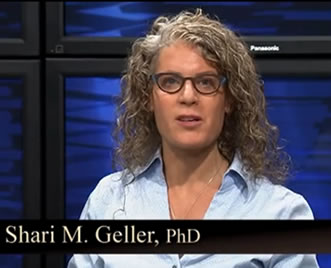 Presence in Psychotherapy
APA Systems of Psychotherapy Video Series
Presence in psychotherapy, considered to be a fundamental underlying quality of an effective therapeutic relationship, is essentially the state of having one’s whole self in the encounter with a client by being completely in the moment on a multiplicity of levels: physically, emotionally, cognitively, and spiritually.
Not a replacement for technique, presence in psychotherapy is a foundational stance that supports deep listening and understanding of the client in the moment, and is also a framework for psychotherapy that fosters a deep client–therapist connection through various aspects, such as the awareness of bodily sensations, emotions, and perception. Being fully present allows for an attuned responsiveness that is based on a kinesthetic and emotional sensing of the other’s experience as well as one’s own intuition and skill, and the relationship between both.
In this demonstration, Dr. Shari Geller works with a woman who, after the loss of her brother and father, sought out the opportunity to release long-held feelings of deep pain and depression. Watch a sample of the video here
Series 1 – Systems of Psychotherapy
by American Psychological Association
Private Training or Consultation Request
Dr. Shari Geller offers consultation services and a variety of trainings to meet your group’s needs. Shari travels locally, nationally, and internationally to offer adherent training in therapeutic presence and self-compassion as a standalone event or through sequential ongoing training. Please complete the Request Form below and we will contact you to see how we can work together to exceed your organization’s training goals! We look forward to hearing from you and exploring your interests.